Quarterly Planning Facilitation
Choose the priorities. Agree what can wait.
I help leadership and delivery teams turn competing requests into a shared plan with clear tradeoffs, named owners, and commitments grounded in available capacity.
Discuss your next planning cycle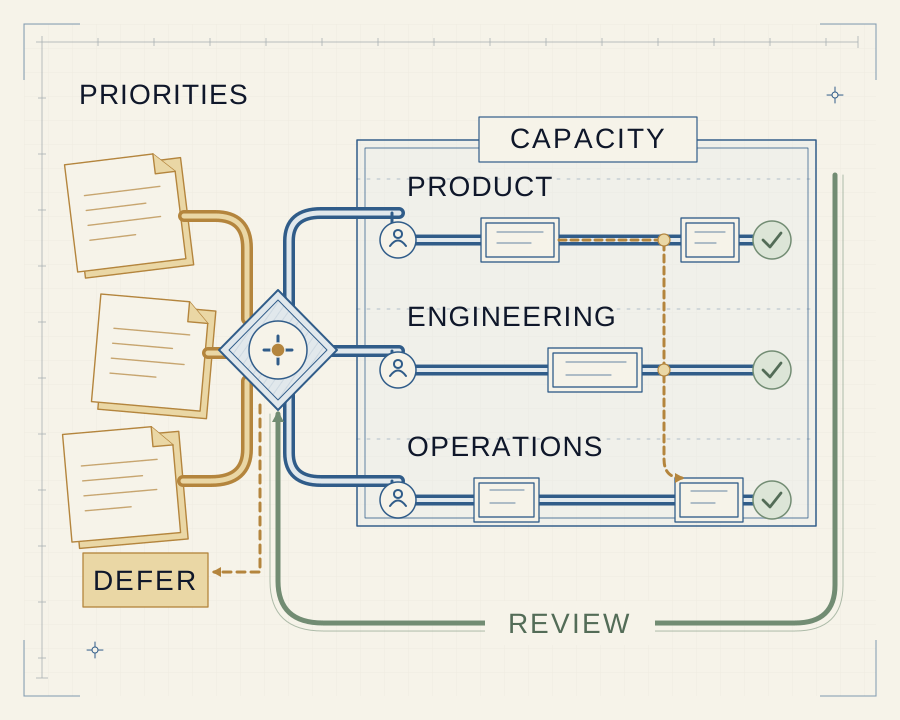
Make room for the priorities. Connect the owners and dependencies. Build in a way to review the plan.
View full diagram- Format
- Two-day process; preparation agreed first
- Focus
- One agreed planning group
- You leave with
- Priorities, owners, and follow-through
Make the decisions that keep getting postponed.
Useful when everything is a priority, teams make conflicting commitments, or the last plan never became action. These are illustrative planning decisions.
What gets our attention?
The tensionA launch, customer requests, and maintenance compete for the same people.
The decisionRanked priorities, capacity assumptions, and an explicit defer and stop list.
Who needs what from whom?
The tensionTeams make plans that depend on work nobody has committed to.
The decisionNamed owners and visible dependencies, with unresolved commitments flagged.
How will we follow through?
The tensionThe plan is agreed, but nobody knows when to revisit it.
The decisionA review rhythm and a clear way to raise issues and adjust priorities.
A plan built through decisions.
I structure the conversations, surface constraints, and record the choices. Your leaders own the business decisions and commitments.
Prepare the decisions
We identify the planning group and review goals, existing commitments, capacity, and known dependencies. I surface the choices that need decision makers in the room.
You getA focused agenda and the inputs needed to make decisions
Make the tradeoffs
Across the two-day process, I help the group compare options, test capacity assumptions, and agree what to pursue, defer, or stop.
You getAgreed priorities and a record of the choices and reasons
Put owners behind the plan
We confirm accountability, cross-team dependencies, and assumptions to check. The group agrees when to review progress and how to resolve issues.
You getOwners, dependencies, and an agreed review cadence
Preparation and follow-up support are scoped separately from the two-day process. The engagement covers one agreed planning group.
A few practical questions
Who takes part, and what should we prepare?
People who can decide priorities and people accountable for delivery. We agree the group and preparation in advance, including current goals, existing commitments, realistic capacity, and known dependencies. Preparation needs vary with the starting point.
Can we work remotely and keep our existing tools?
Yes. I can facilitate remotely and work within your current planning framework and tools. We agree the schedule around participant locations and the decisions the sessions need to resolve.
What if we disagree on priorities?
I make competing goals, evidence, and constraints explicit so the group can compare tradeoffs. Where agreement is not possible, the accountable leader decides. I record that decision and its implications.
What happens after the two days?
Your owners carry the plan forward using the agreed review cadence. Further facilitation or implementation support is scoped separately. Ongoing product ownership and a wider operating-model redesign are outside this planning engagement.
Next step