Delivery Recovery Sprint
When delivery slips, make the next move clear.
I help founders and product or engineering leaders understand what is holding up one initiative, make the difficult scope decisions, and agree a recovery plan their team can own.
Discuss your delivery problem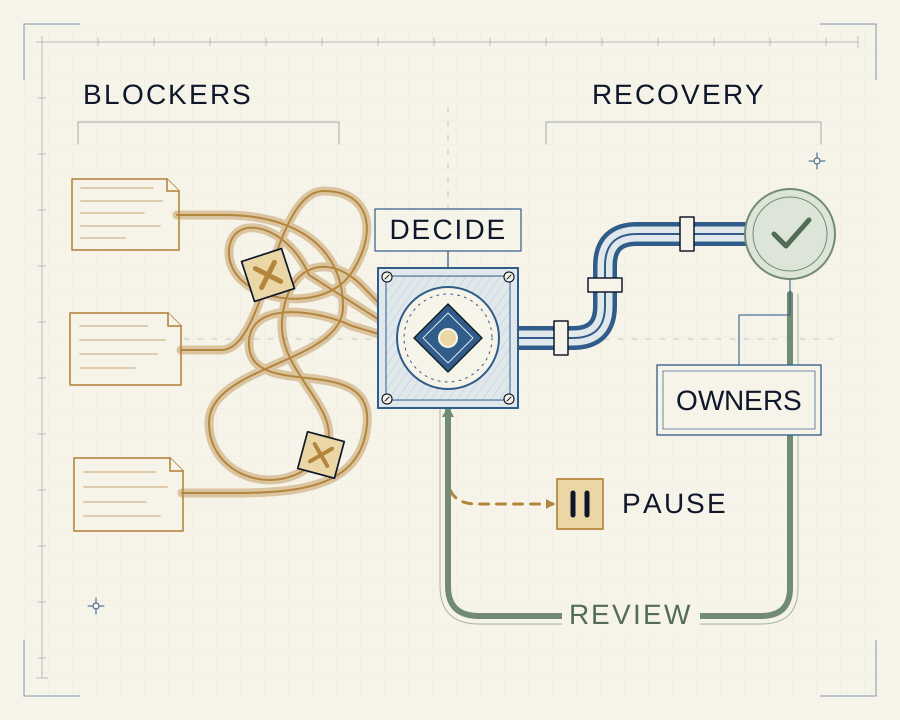
Trace the blockers. Compare the options. Choose a recovery approach with named owners.
View full diagram- Format
- Focused sprint; duration agreed after scope review
- Focus
- One slipping initiative
- You leave with
- Recovery decisions, owners, and next steps
Turn a slipping commitment into a decision.
Three illustrative situations. We start with the evidence behind your initiative, including what is still uncertain.
The date keeps moving
What is happeningEach new estimate pushes the release out, while new requests keep arriving.
What we clarifyOptions to reduce scope or change the sequence, with explicit tradeoffs.
Work is waiting on work
What is happeningA critical dependency crosses teams or suppliers, with no clear owner.
What we clarifyThe blocking decision, who can make it, and an agreed next action.
The reports don’t agree
What is happeningLeadership hears different accounts of what is done and what remains.
What we clarifyOne shared picture of progress, gaps, and assumptions to check.
Facts first. Then a plan people can act on.
I assess the situation and structure the choices. Your accountable leaders decide the commitments; the team owns delivery.
Establish the facts
I review commitments and delivery evidence, speak with the people doing the work, and trace blockers and dependencies.
You getA current-position assessment and blocker map
Choose a way forward
We compare realistic options: reduce scope, resequence, continue, pause, or stop. I make the assumptions and consequences visible.
You getRecovery options and a record of the agreed decisions
Put owners behind the plan
We name action owners, sequence next steps, and agree when to review progress and how to escalate unresolved issues.
You getAn owned action plan, review cadence, and executive readout
The sprint covers one initiative. Engineering repair, ongoing project management, and wider organizational changes require separate scope.
A few practical questions
Who needs to be involved?
A sponsor who can decide scope and commitments, plus the product, engineering, and delivery owners—including an agency if relevant. I need existing plans, work tracking, release evidence, and time for candid conversations. We make missing information explicit.
How long does it take? Can we keep the original date?
I confirm duration after reviewing the initiative, evidence, and access to decision makers. The assessment tests what is credible; it cannot guarantee the original deadline or remove technical uncertainty.
What if the right answer is to stop?
Pausing or stopping is a valid option. I make the evidence, remaining uncertainty, and consequences clear so accountable leaders can decide whether further work is justified.
Do you take over delivery afterward?
The sprint establishes the recovery approach and ownership. If you need ongoing coordination or product leadership, we agree that mandate separately, including responsibilities, decision authority, and duration.
Next step